
The Construction Labor Shortage Needs a Better Way to Build

Updated: Aug 31
The construction labor shortage is the hardest constraint in the industry. Associated Builders and Contractors estimates construction must attract 349,000 net new workers in 2026, and 456,000 more in 2027. At the same time, America is short millions of homes. You cannot hire your way out of that gap fast enough. You change where the work happens. Panelized offsite construction moves most of the build indoors, into a factory, where a trained crew turns out more finished housing per hour.
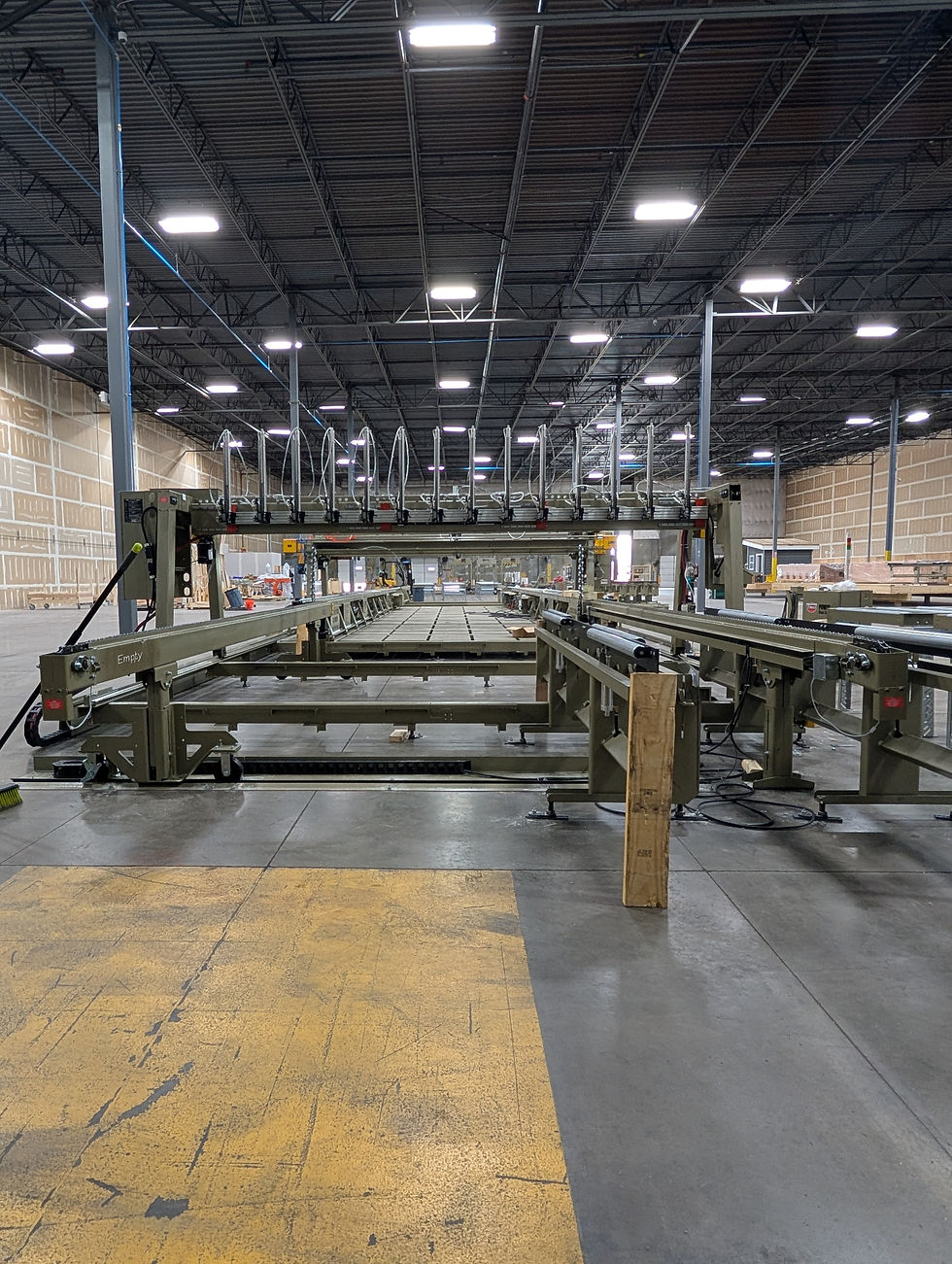
Module Building Systems (MBS) manufactures finished wall and floor panels in a 40,000 sq ft CNC facility in St. Louis. Here is how that changes the labor math on a project.
How big is the construction labor shortage?
The numbers are published and consistent. Associated Builders and Contractors released a workforce model in January 2026, estimating that the industry needs 349,000 net new workers this year, and 456,000 in 2027 as construction spending growth resumes. ABC points to an aging and retiring workforce, immigration enforcement, materials prices, and tariffs as the main pressures.
Construction needs 349,000 net new workers in 2026 and 456,000 in 2027, according to Associated Builders and Contractors. Recruiting alone will not close that gap.
Housing feels this first. Homes are built by hand, outdoors, by a rotating cast of subcontractors. Every open trade position is a day added to a schedule and a dollar added to a budget.
Why the shortage hits site-built housing hardest
A stick-built home is a relay race. Framers wait on the foundation. Sheathing waits on framing. Insulation waits on rough-in. Each handoff needs a specific trade to show up on a specific day. Miss one and the whole sequence slides.
Weather makes it worse. Rain stops framing. Cold stops concrete. Materials sitting in the open get damaged and need to be reordered. None of that produces housing. All of it consumes labor hours.

Panelized construction moves the work indoors
MBS builds wall and floor panels on jigged stations inside a 40,000 sq ft CNC manufacturing facility. Cutting is machine-driven and precise. The same crew works the same stations every day, in the same conditions, with materials already staged.
Panels leave the factory finished. Windows, doors, cladding, insulation, sheathing, and MEP are pre-installed before the panel is loaded. They ship flat-packed and vertically on standard flatbeds within 1,000 miles.
MBS manufactures a 1,500 sq ft home in one week. On site, that home is assembled to weather-tight lockdown in 4 days.
That is the labor shift in one sentence. The trade hours still happen, but most of them take place indoors, on a repeatable line, rather than outdoors on a jobsite, waiting for the next subcontractor.
Fewer site hours, more output per worker
Factory work is easier to staff than site work. It is indoors, in one location, with a predictable schedule and a shorter commute. A worker can be trained on a station in days rather than apprenticing for years, then cross-trained across stations as the plant scales.
On site, the crew gets smaller, and the work gets shorter. Panels arrive numbered and sequenced. Assembly is craning, setting, and fastening rather than measuring, cutting, and framing in place. A general contractor who cannot find six framing crews can still hit the schedule with one assembly crew.

Training the workforce the industry actually needs
Recruiting is only half the answer. The other half is training, and MBS treats it as a core commitment rather than a side program. Education is one of the three pillars of MBS's commitment, alongside Social and Environmental.
MBS partners with Ranken Technical College in St. Louis to build a pipeline into advanced manufacturing and modular construction careers. The plant is located in North St. Louis, and the jobs it creates are meant to remain in that community. Founded in 2023, MBS was built around affordable housing, homelessness, and disaster relief, and the workforce is part of that mission, not separate from it.
What this means for developers, GCs, and municipalities
Labor scarcity shows up on a pro forma as risk. Panelized construction converts a large share of that risk into a fixed factory price.
MBS panelized construction delivers up to 30% lower project cost, 50% faster delivery, and up to 90% less waste. Because panels are manufactured on a controlled line, pricing is set at the factory instead of varying with local trade availability. See the full process from design to assembly, and the building types MBS panelizes, from ADUs and single-family homes to 1- to 6 story multifamily, townhomes, and mixed-use.
For municipalities, states, and community development corporations, the calculation is simpler still. A panelized program lets a housing plan proceed on a schedule that does not depend on how many framers are available in that market this quarter.
Frequently asked questions
Does panelized construction reduce the number of workers a project needs?
It reduces the number of skilled trade workers needed on the jobsite and shortens their time there. MBS panels arrive finished with windows, doors, cladding, insulation, sheathing, and MEP pre-installed, so onsite work is assembly rather than framing from scratch. A 1,500 sq ft home reaches weather-tight lockdown in 4 days.
How many construction workers does the industry need?
Associated Builders and Contractors estimates the construction industry must attract 349,000 net new workers in 2026 and 456,000 in 2027 to meet demand, based on a model published in January 2026.
Is factory work easier to staff than jobsite work?
It is easier to staff and easier to train. Factory production is indoors, in a single location, on a predictable schedule, with repeatable station-based tasks. That widens the pool of people who can enter the trade and shortens the time it takes to make them productive.
What is MBS doing about construction workforce training?
MBS partners with Ranken Technical College in St. Louis to train workers for advanced manufacturing and modular construction careers. Education is one of the three MBS commitment pillars, alongside Social and Environmental, and the 40,000 sq ft facility is located in North St. Louis to keep those jobs in the community.
Can panelized construction be used for multifamily and affordable housing?
Yes. MBS panelizes single-family homes, ADUs and tiny homes, townhomes, mixed-use, 1- to 6-story multifamily, and temporary or disaster-relief structures. More detail is available in the MBS FAQ.
Build through the labor shortage, not around it.
The shortage is structural. The response has to be structural too. Moving the build into a factory is how MBS delivers housing up to 30% cheaper, 50% faster, and with up to 90% less waste, using a workforce it can train and keep.
Get a quote for your project, or email info@modulebs.com. Learn more about MBS.
Module Building Systems. A Better Way to Build for Tomorrow. Advanced Panelized Construction.


Comments